Top Renewable Energy Sources: 7 Powerful Options for a Sustainable Future
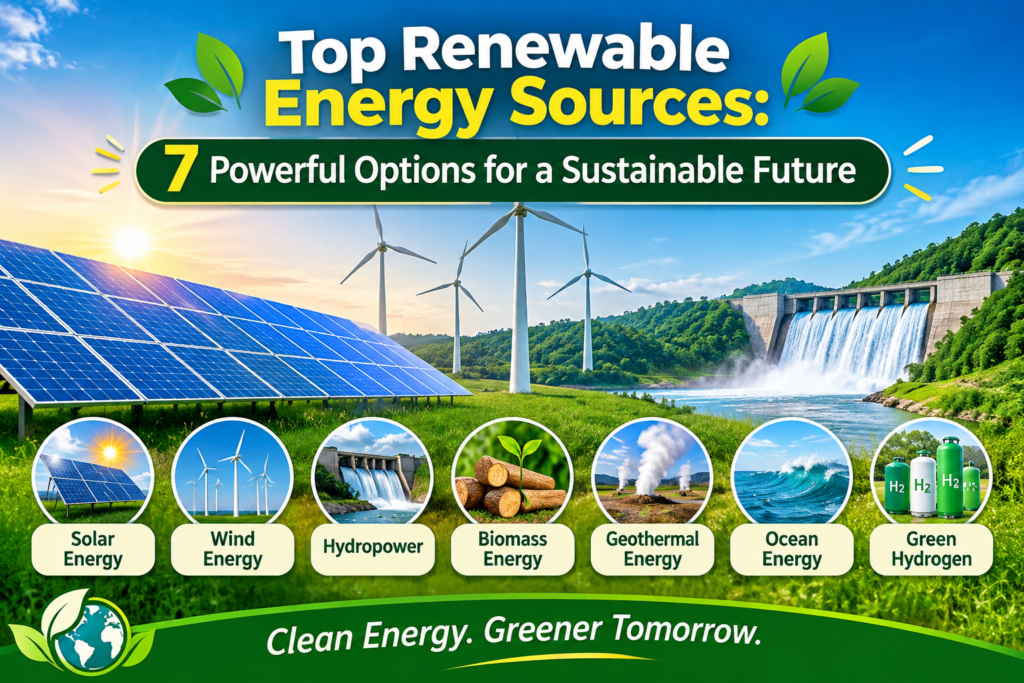
Top renewable energy sources are transforming the global energy industry by offering cleaner, more sustainable and increasingly affordable alternatives to conventional fossil fuels. As electricity demand continues to rise, countries worldwide are investing in renewable energy technologies to reduce carbon emissions, improve energy security and build a sustainable future.
India is also experiencing significant growth in renewable energy development. Government initiatives, technological advancements, private-sector investments and increasing environmental awareness are accelerating the adoption of clean energy solutions. Solar power and wind energy, in particular, are becoming important contributors to India’s electricity generation capacity.
Understanding the top renewable energy sources is essential for businesses, infrastructure developers, policymakers and individuals who want to participate in the clean energy transition. Each renewable energy technology has unique advantages, applications and development requirements.
At Alfa Infraprop Pvt. Ltd., renewable energy development is an important part of building a more sustainable energy ecosystem. The company develops and operates utility-scale grid-interactive solar photovoltaic (PV) power plants and wind farms across several Indian states. Its focus on engineering, project development and operational efficiency supports the growing demand for reliable green power.
In this comprehensive guide, we will explore the top renewable energy sources, their benefits, applications, limitations and future opportunities in India and around the world.
What Are Renewable Energy Sources?
Renewable energy sources are natural resources that replenish themselves continuously or within a relatively short period. Unlike fossil fuels such as coal, petroleum and natural gas, renewable resources can provide energy without depending on finite underground fuel reserves.
The top renewable energy sources include sunlight, wind, flowing water, organic materials and heat from beneath the Earth’s surface.
These resources can be converted into electricity, heating, cooling and other useful forms of energy through specialised technologies.
For example:
- Solar panels convert sunlight into electricity.
- Wind turbines convert moving air into electrical power.
- Hydropower stations generate electricity from flowing water.
- Biomass facilities convert organic materials into usable energy.
- Geothermal systems utilise heat from beneath the Earth’s surface.
Renewable energy technologies are becoming increasingly important because they help reduce greenhouse gas emissions and diversify electricity generation.
According to the International Energy Agency (IEA), solar PV accounted for more than three-quarters of global renewable capacity additions in 2024, demonstrating the growing importance of solar technology.
Read more: International Energy Agency – Renewable Energy.
Why Are the Top Renewable Energy Sources Important?
The growing popularity of the top renewable energy sources is driven by environmental, economic and energy-security considerations.
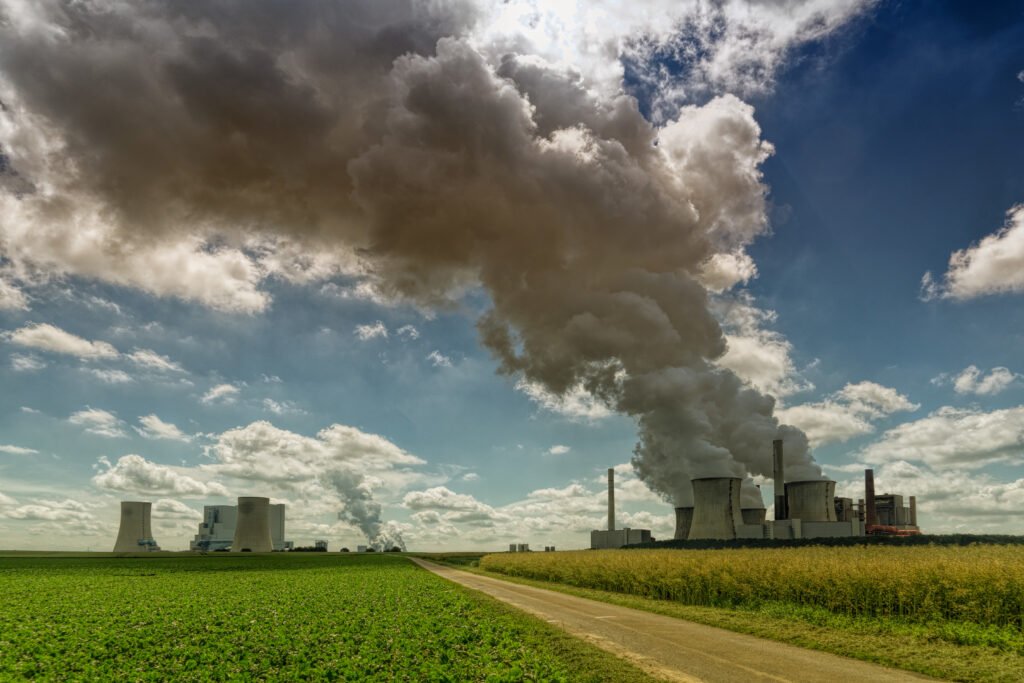
Traditional energy generation depends heavily on fossil fuels, which release greenhouse gases when burned. These emissions contribute to climate change, air pollution and environmental degradation.
Renewable energy provides an alternative that can significantly reduce operational emissions and support long-term sustainability.
Some major reasons renewable energy is important include:
1. Environmental protection
Renewable energy technologies generally produce substantially lower lifecycle greenhouse gas emissions than fossil-fuel-based electricity generation.
2. Energy security
Countries can utilise locally available sunlight, wind, water and biomass to diversify their energy supply and reduce exposure to imported fuel markets.
3. Economic development
Renewable energy projects create employment opportunities in engineering, manufacturing, construction, transportation and maintenance.
4. Long-term cost advantages
Once installed, solar panels and wind turbines do not require continuous purchases of fuel. Their operating economics can therefore be attractive over their project lifetimes.
5. Sustainable infrastructure
Renewable energy supports the development of modern infrastructure that considers environmental performance alongside economic growth.
These advantages explain why the top renewable energy sources are receiving increasing attention from governments, investors and infrastructure companies.
1. Solar Energy – One of the Top Renewable Energy Sources
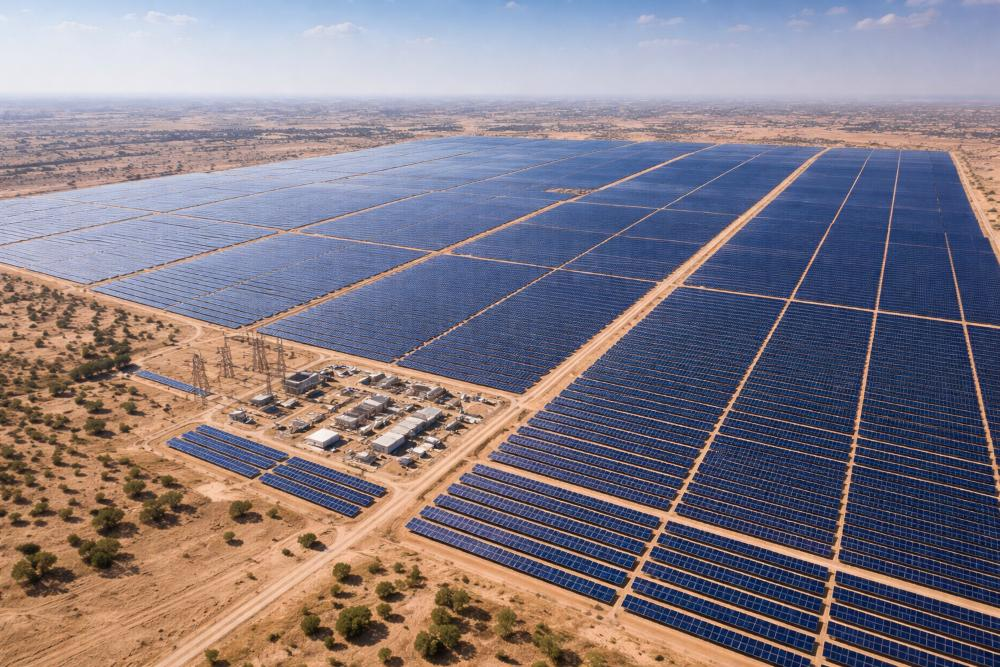
Solar energy is one of the most widely adopted options among the top renewable energy sources. It uses sunlight to generate electricity or heat through specialised technologies.
Solar power has become particularly important in India because the country receives abundant sunlight throughout the year. This natural advantage creates excellent opportunities for residential, commercial, industrial and utility-scale solar projects.
How Does Solar Energy Work?
Solar photovoltaic (PV) technology converts sunlight directly into electricity.
Solar panels contain photovoltaic cells, generally made from semiconductor materials such as silicon. When sunlight strikes these cells, it creates an electrical current.
The electricity generated can then be converted into usable alternating current through an inverter.
A typical solar power system includes:
- Solar photovoltaic panels.
- Inverters.
- Mounting structures.
- Electrical cables and protection equipment.
- Monitoring and control systems.
- Battery storage, where required.
Solar thermal technology is another approach that uses sunlight to generate heat for industrial processes, water heating and other applications.
Advantages of Solar Energy
Solar energy offers several important benefits:
Abundant availability: Sunlight is a widely available natural resource, particularly in countries with favourable climatic conditions.
Low operating costs: Solar installations generally have relatively low maintenance and operating requirements.
Scalability: Solar systems can range from small rooftop installations to large utility-scale power plants.
Reduced emissions: Solar electricity generation does not require fuel combustion during normal operation.
Energy independence: Businesses and households can reduce their dependence on conventional electricity supplies through suitable solar installations.
Applications of Solar Energy
Solar power is used across several sectors, including:
- Residential rooftop electricity generation.
- Commercial and industrial facilities.
- Utility-scale solar parks.
- Solar-powered agricultural pumps.
- Street lighting and public infrastructure.
- Solar-powered water heating systems.
India’s solar energy industry has expanded significantly through government support, private investment and improvements in photovoltaic technology.
According to India’s Ministry of New and Renewable Energy, solar power is one of the country’s leading renewable energy technologies.
For official information, visit the Ministry of New and Renewable Energy.
Why Is Solar Energy Important for India?
Solar power is particularly suitable for India because of its geographical conditions and growing electricity requirements.
States such as Rajasthan, Gujarat, Maharashtra and Karnataka offer opportunities for large-scale solar development.
Utility-scale solar projects can contribute electricity to regional grids, while rooftop installations can help businesses manage their electricity requirements.
For companies such as Alfa Infraprop, solar PV development represents an important opportunity to support India’s expanding clean electricity infrastructure.
Among the top renewable energy sources, solar power stands out because of its scalability, technological maturity and growing economic competitiveness.
2. Wind Energy – Harnessing the Power of Moving Air
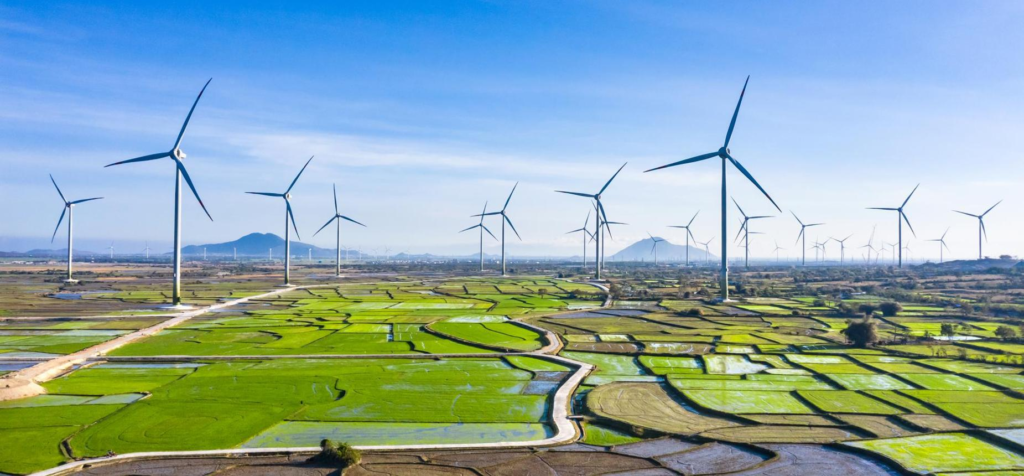
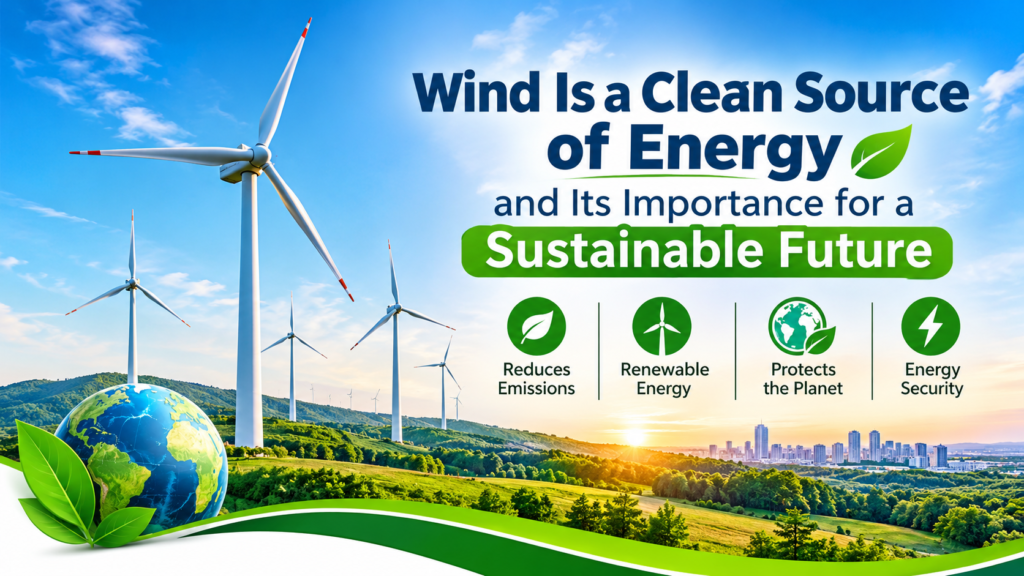
Wind energy is another major contributor among the top renewable energy sources. It generates electricity by converting the kinetic energy of moving air into mechanical energy and subsequently electrical power.
Wind power is becoming increasingly important as countries seek to diversify their electricity generation systems and reduce dependence on fossil fuels.
India has considerable wind energy potential because of its long coastline, favourable geographical locations and suitable wind conditions across several states.
How Does Wind Energy Work?
Wind turbines are designed to capture the energy of moving air.
When wind passes across turbine blades, it creates aerodynamic lift, causing the rotor to rotate. This rotational movement drives a generator that produces electricity.
The electricity is then processed and transmitted through electrical infrastructure to the grid.
A typical wind power installation includes:
- Turbine blades.
- Rotor and hub.
- Nacelle.
- Generator.
- Tower and foundation.
- Power conversion equipment.
- Grid connection infrastructure.
Modern wind turbines are designed to operate efficiently across different wind conditions.
Advantages of Wind Energy
Wind power provides several environmental and economic benefits.
Clean electricity generation: Wind turbines generate electricity without burning fossil fuels.
Renewable availability: Wind is naturally replenished through atmospheric processes.
Large-scale generation: Wind farms can contain multiple turbines and supply significant quantities of electricity.
Land-use flexibility: Agricultural activities and certain other land uses can continue around appropriately designed wind installations.
Long-term operational potential: Properly maintained wind turbines can operate for many years.
Applications of Wind Energy
Wind energy is used in several applications:
- Large onshore wind farms.
- Offshore wind installations.
- Hybrid solar-wind power projects.
- Electricity supply to regional power grids.
- Renewable energy procurement for industrial consumers.
Onshore wind projects are especially relevant to India’s renewable energy development.
Wind Energy in India
India is among the leading countries in installed wind power capacity.
States such as Tamil Nadu, Gujarat, Karnataka, Maharashtra and Rajasthan offer favourable locations for wind development.
Wind energy also complements solar generation. Solar installations generally produce electricity during daylight hours, while wind availability varies according to local weather and seasonal conditions.
Combining these technologies can improve the overall renewable energy generation profile.
For infrastructure developers, wind projects require detailed site assessment, wind-resource measurement, land planning, grid connectivity and long-term maintenance.
The top renewable energy sources are not necessarily competing technologies. Wind and solar can work together to support a more diversified electricity system.
3. Hydropower – Generating Electricity from Flowing Water
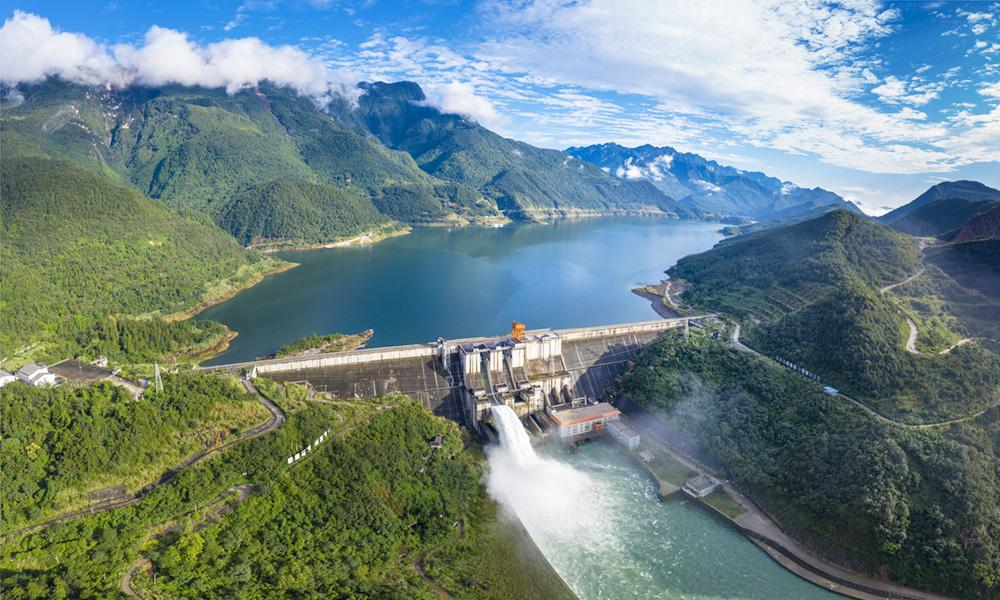
Hydropower is one of the oldest and most established technologies among the top renewable energy sources.
It uses the energy of flowing or falling water to generate electricity. Hydropower facilities can provide substantial electricity generation capacity and, depending on their design, support electricity-system flexibility.
Unlike solar and wind energy, certain hydropower facilities can adjust electricity production according to demand and water availability.
How Does Hydropower Work?
Hydropower plants generally use flowing water to rotate turbines connected to electrical generators.
Water is directed through channels or pipes towards turbines. Its movement causes the turbine blades to rotate, converting hydraulic energy into mechanical energy.
The connected generator converts this mechanical energy into electricity.
Common types of hydropower installations include:
1. Storage hydropower
These facilities use reservoirs to store water and release it when electricity is required.
2. Run-of-river hydropower
These projects utilise the natural flow of rivers and generally require less water storage than conventional reservoir-based facilities.
3. Pumped-storage hydropower
These facilities move water between two reservoirs at different elevations. They can store electricity by pumping water uphill when power is available and generate electricity when water flows downhill.
Advantages of Hydropower
Hydropower offers several advantages:
- Reliable electricity generation when water resources are available.
- Long operating lifetimes for well-maintained facilities.
- Potential support for grid stability.
- Electricity storage through pumped-storage systems.
- No direct fuel combustion during normal operation.
Limitations of Hydropower
Despite its advantages, hydropower development requires careful environmental and social planning.
Large dams may affect river ecosystems, fish migration, sediment movement and surrounding communities.
Project costs, geological conditions, water availability and environmental approvals also influence feasibility.
Climate change can further affect hydrological patterns and water availability.
Hydropower Opportunities in India
India has substantial hydropower resources, particularly in Himalayan and northeastern regions.
Hydropower contributes to electricity generation while pumped-storage projects can help balance fluctuations from solar and wind installations.
Among the top renewable energy sources, hydropower is particularly valuable because certain facilities can provide flexibility that complements variable renewable generation.
4. Biomass Energy – Converting Organic Waste into Useful Power
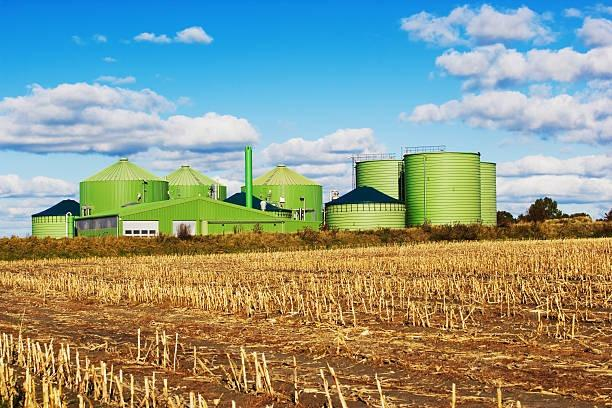
Biomass energy is another important option among the top renewable energy sources. It uses organic materials from plants, agricultural residues, forestry operations and certain waste streams to produce heat, electricity or fuel.
India produces substantial quantities of agricultural residues and organic waste. These materials can create opportunities for biomass-based energy generation when collected, processed and utilised sustainably.
How Does Biomass Energy Work?
Biomass can be converted into usable energy through several technologies.
Direct combustion: Organic materials are burned in controlled systems to produce heat, which can generate steam and drive turbines.
Anaerobic digestion: Microorganisms break down organic materials without oxygen, producing biogas.
Gasification: Biomass is converted into a combustible gas through high-temperature processes with limited oxygen.
Biofuel production: Certain organic materials can be processed into liquid fuels such as biodiesel and bioethanol.
Advantages of Biomass Energy
Biomass offers several useful benefits:
- Utilisation of agricultural and organic waste.
- Opportunities for rural employment.
- Potential reduction in uncontrolled residue burning.
- Production of electricity, heat and gaseous fuels.
- Diversification of the renewable energy mix.
Biomass facilities can also provide dispatchable electricity when fuel supplies and plant operations are properly managed.
Applications of Biomass Energy
Biomass energy can be used in:
- Sugar mills and bagasse-based cogeneration plants.
- Agricultural processing industries.
- Industrial heating systems.
- Biogas production facilities.
- Waste-to-energy projects.
- Biofuel manufacturing.
Biomass Energy in India
India’s agricultural economy provides significant opportunities for biomass utilisation.
Crop residues, sugarcane bagasse, animal waste and organic municipal waste can become valuable energy resources.
However, successful biomass projects require dependable feedstock supplies, efficient transportation, appropriate storage facilities and pollution-control systems.
Sustainable sourcing is essential because excessive removal of agricultural residues can affect soil health and nutrient availability.
Biomass is among the top renewable energy sources that can connect rural development, waste management and energy production.
5. Geothermal Energy – Using Heat from Beneath the Earth’s Surface
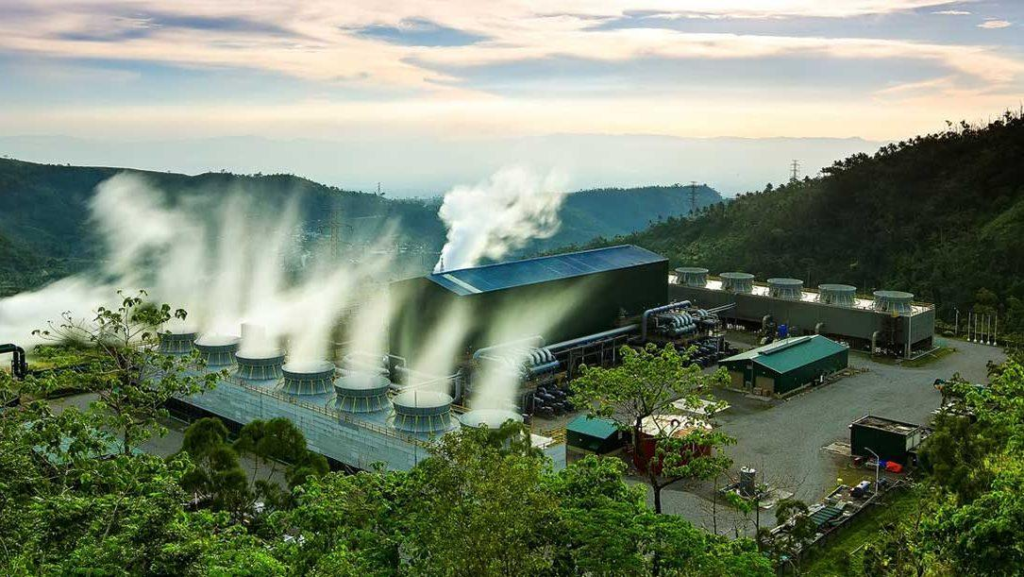
Geothermal energy uses natural heat stored beneath the Earth’s surface to generate electricity or provide heating and cooling.
It is one of the top renewable energy sources with the potential to provide relatively continuous energy generation, depending on the availability and characteristics of geothermal resources.
Unlike solar and wind power, geothermal energy is not directly dependent on daily sunlight or wind conditions.
How Does Geothermal Energy Work?
Heat from deep underground warms rocks and underground water.
Geothermal power plants access these resources through specially drilled wells.
Hot water or steam is brought to the surface and used to drive turbines or operate heat-exchange systems.
The generated electricity is then supplied to the power grid.
Common geothermal technologies include:
- Dry steam power plants.
- Flash steam power plants.
- Binary-cycle power plants.
- Geothermal heating systems.
- Ground-source heat pumps.
Advantages of Geothermal Energy
Geothermal energy offers several advantages:
Continuous generation: Suitable geothermal facilities can produce electricity throughout the day.
Small surface footprint: Some geothermal installations require relatively limited surface land compared with other power technologies.
Low operational emissions: Geothermal electricity generally has low lifecycle emissions compared with fossil-fuel generation.
Heating and cooling applications: Geothermal resources can support buildings and industrial facilities.
Challenges of Geothermal Energy
Geothermal development requires specialised geological investigations and drilling.
Initial exploration and development costs can be high, and suitable resources are geographically concentrated.
Projects must also manage groundwater, mineral deposits and potential induced seismicity.
Geothermal Energy Opportunities in India
India has identified geothermal prospects in several regions, including Himalayan areas.
Although geothermal electricity development remains less established than solar and wind power, future research and technological improvements may create new opportunities.
The top renewable energy sources include both commercially mature technologies and emerging solutions that could become increasingly important over time.
6. Tidal and Wave Energy – Harnessing the Power of Oceans
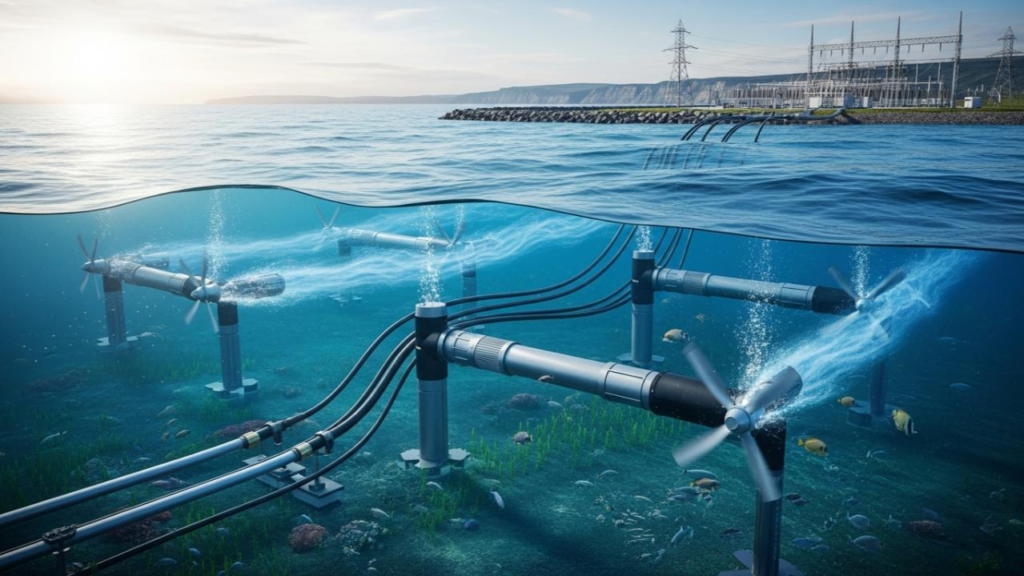
Tidal and wave energy technologies use the movement of ocean water to generate electricity.
They represent another category among the top renewable energy sources, particularly for countries with suitable coastlines and marine conditions.
India has a long coastline, making marine energy an interesting area for future research and technological development.
How Does Tidal Energy Work?
Tidal energy utilises the natural rise and fall of sea levels caused primarily by the gravitational influence of the Moon and Sun.
Tidal power systems capture this movement using specialised equipment.
Common technologies include:
- Tidal stream turbines.
- Tidal barrages.
- Tidal lagoons.
Tidal stream turbines operate similarly to underwater wind turbines, capturing the movement of flowing seawater.
How Does Wave Energy Work?
Wave energy systems capture the movement of ocean waves.
Different technologies use floating devices, oscillating water columns or other mechanical systems to convert wave motion into electricity.
Advantages of Marine Energy
Marine energy offers several potential advantages:
- Renewable energy from natural ocean movements.
- Predictable tidal patterns.
- Opportunities for coastal infrastructure development.
- Potential diversification of electricity generation.
- Possible integration with offshore renewable energy systems.
Challenges of Tidal and Wave Energy
Marine energy technologies face challenges related to high development costs, corrosion, marine ecosystems, equipment maintenance and difficult operating conditions.
Commercial deployment is still less widespread than solar and wind generation.
For India, marine energy remains an area where research, investment and technological innovation could create future opportunities.
7. Green Hydrogen – An Emerging Clean Energy Solution
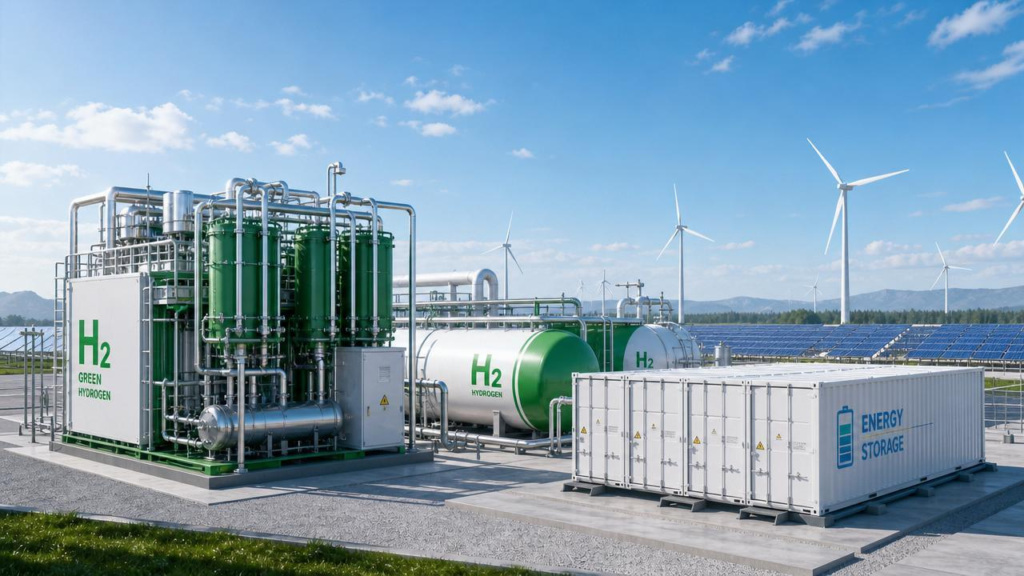
Green hydrogen is an emerging energy solution that can complement the top renewable energy sources and support the decarbonisation of industries that are difficult to electrify directly.
Hydrogen is not a primary renewable energy source like sunlight or wind. Instead, it is an energy carrier that can be produced using renewable electricity.
Green hydrogen is generally produced through water electrolysis powered by renewable electricity.
How Is Green Hydrogen Produced?
Electrolysis uses electricity to split water into hydrogen and oxygen.
When the electricity comes from renewable sources such as solar or wind, the resulting hydrogen can be classified as green hydrogen, subject to the applicable production standards.
The hydrogen can then be stored, transported and used in suitable applications.
Advantages of Green Hydrogen
- Supports industrial decarbonisation.
- Can store renewable electricity in chemical form.
- Provides potential alternatives to fossil fuels in selected sectors.
- Can support certain heavy transport applications.
- Creates opportunities for clean industrial infrastructure.
Applications of Green Hydrogen
Green hydrogen may be used in:
- Fertiliser manufacturing.
- Steel production.
- Refineries.
- Selected heavy transport applications.
- Industrial heating.
- Energy storage and power generation.
Green Hydrogen in India
India’s National Green Hydrogen Mission aims to develop the country as a major producer and supplier of green hydrogen.
The development of renewable electricity infrastructure is important for this objective because affordable clean electricity is a major requirement for producing green hydrogen competitively.
Solar and wind power could therefore play an important role in supporting India’s emerging hydrogen economy.
Comparison of the Top Renewable Energy Sources
The top renewable energy sources differ in their generation methods, infrastructure requirements, operating characteristics and potential applications.
The following table provides a simplified comparison.
| Energy source | Main resource | Major advantage | Main challenge |
|---|---|---|---|
| Solar | Sunlight | Scalable and widely available | Weather and daylight dependency |
| Wind | Moving air | Large-scale electricity generation | Variable wind conditions |
| Hydropower | Flowing water | Flexible generation in suitable facilities | Environmental and water constraints |
| Biomass | Organic material | Uses suitable waste resources | Feedstock availability |
| Geothermal | Underground heat | Potential continuous generation | Location and drilling costs |
| Tidal and wave | Ocean movement | Renewable marine resource | High technology costs |
| Green hydrogen | Renewable electricity and water | Industrial energy storage and decarbonisation | Production and infrastructure costs |
The most appropriate technology depends on geographical conditions, energy requirements, project economics, environmental considerations and grid infrastructure.
No single technology can meet every electricity requirement. A diversified energy system that combines several renewable technologies can offer greater flexibility and resilience.
Renewable Energy Development in India: Current Growth and Opportunities
India is rapidly expanding its renewable energy infrastructure to meet rising electricity demand while supporting long-term sustainability objectives.
The country has considerable potential for solar, wind, hydropower and biomass development. Government policies, infrastructure investments and private-sector participation are helping accelerate this transition.
According to the Government of India’s Ministry of New and Renewable Energy and official industry updates, renewable energy capacity has increased substantially over recent years.
A November 2025 government update reported approximately 253.96 GW of installed renewable energy capacity, including large hydropower, as of November 2025. The country has also continued to expand its solar and wind project pipeline.
More recent developments in 2026 demonstrate the continued expansion of India’s clean energy infrastructure. The International Energy Agency’s India Renewable Energy Market Report discusses the country’s accelerating renewable energy deployment.
Key Factors Driving Renewable Energy Growth in India
1. Government initiatives
Government programmes encourage solar power development, renewable energy manufacturing, green hydrogen production and electricity infrastructure improvements.
2. Increasing electricity demand
Industrial development, urbanisation, transportation electrification and digital infrastructure are increasing India’s electricity requirements.
3. Private-sector investment
Private companies are investing in renewable power generation, transmission, storage and associated infrastructure.
4. Technological improvements
Improvements in solar modules, wind turbines, battery storage and power electronics are helping improve renewable energy project performance.
5. Environmental awareness
Businesses and consumers are increasingly considering environmental performance when making energy-related decisions.
The expansion of the top renewable energy sources is therefore connected to India’s broader infrastructure development and economic growth.
Opportunities for Renewable Energy Developers
India offers opportunities for companies involved in renewable energy development, including:
- Utility-scale solar PV installations.
- Onshore wind farms.
- Solar-wind hybrid projects.
- Renewable energy storage systems.
- Grid connectivity infrastructure.
- Engineering, procurement and construction services.
- Plant operations and maintenance.
Successful renewable energy development requires a combination of technical expertise, project planning, financial management and operational capabilities.
Challenges Associated with the Top Renewable Energy Sources
Although the top renewable energy sources provide significant benefits, their development also involves certain challenges.
Understanding these challenges is important for creating efficient, reliable and financially sustainable renewable energy projects.
1. Intermittent Power Generation
Solar and wind generation depend on weather conditions and natural resource availability.
Solar power production generally decreases at night, while wind generation varies with wind speed.
Energy storage, hybrid systems, better forecasting and grid flexibility can help manage these variations.
2. High Initial Investment
Renewable energy projects often require significant upfront expenditure for land, equipment, engineering, installation and grid connectivity.
Although operating expenses can be relatively low, developers must evaluate project financing and long-term returns carefully.
3. Land Availability
Large solar parks and wind farms require suitable locations.
Land acquisition, local regulations, environmental considerations and community engagement can influence project development timelines.
4. Grid Infrastructure
Renewable energy projects must connect to suitable transmission and distribution networks.
In some locations, insufficient transmission capacity can delay electricity evacuation or limit generation.
5. Energy Storage Requirements
Battery storage and pumped-storage hydropower can help balance electricity supply and demand.
However, storage systems involve additional investment, technical requirements and lifecycle considerations.
6. Environmental and Resource Management
Renewable technologies also have environmental footprints.
Solar panels, batteries and wind turbines require materials and manufacturing processes. Hydropower can affect river ecosystems, while biomass projects require sustainable feedstock management.
Responsible project planning is necessary to ensure that renewable energy development delivers genuine long-term environmental benefits.
How to Choose the Right Renewable Energy Source for a Project
Selecting from the top renewable energy sources requires a detailed evaluation of the project’s objectives, location and electricity requirements.
A technology that performs well in one geographical region may not be suitable for another.
Businesses and project developers should consider the following factors.
1. Resource Availability
The first step is assessing the natural resources available at the proposed location.
For example:
- Solar projects require favourable sunlight conditions.
- Wind projects require suitable and consistent wind resources.
- Hydropower projects require appropriate water resources.
- Biomass projects require dependable organic feedstock.
- Geothermal projects require suitable underground heat resources.
2. Project Investment
Developers must evaluate land costs, equipment prices, construction expenditure, financing requirements and expected operating costs.
3. Electricity Requirements
The project’s electricity consumption profile is important.
A manufacturing facility operating continuously may have different requirements from a commercial building operating primarily during daylight hours.
4. Grid Connectivity
The availability of suitable transmission infrastructure influences project feasibility.
Grid access, transmission capacity and electricity evacuation arrangements should be evaluated early.
5. Maintenance Requirements
Every renewable technology requires appropriate maintenance.
Solar installations need panel cleaning, electrical inspections and inverter maintenance. Wind turbines require mechanical and electrical inspections, while hydropower facilities need turbine and civil infrastructure maintenance.
6. Environmental Considerations
Environmental impact assessments and responsible resource management help ensure that renewable energy development is sustainable.
7. Long-Term Performance
Project developers should consider equipment reliability, degradation, operational efficiency, weather patterns and expected project lifetime.
The top renewable energy sources can deliver substantial value when the technology is selected according to actual site conditions rather than general market popularity.
The Role of Alfa Infraprop in Renewable Energy Development
Renewable energy infrastructure requires experienced developers with the technical knowledge and operational capabilities to deliver projects efficiently.
Alfa Infraprop Pvt. Ltd. is engaged in renewable energy project development in India, with a focus on utility-scale solar PV power plants and wind farms.
The company owns and operates grid-interactive solar PV power plants and wind farms across several Indian states. Its generated electricity is supplied to state utilities under long-term power purchase agreements.
Solar and Wind Power Development
Solar and wind technologies are among the most important contributors to India’s renewable energy expansion.
By developing and operating projects in these sectors, Alfa Infraprop participates in the country’s growing clean electricity infrastructure.
Engineering, Procurement and Construction Capabilities
Successful renewable energy projects require detailed engineering, appropriate equipment selection, procurement management and coordinated construction.
Alfa Infraprop highlights its in-house EPC capabilities and experienced technical team as important elements of its project implementation approach.
Operations and Maintenance
Renewable energy project performance depends on effective operations and maintenance.
Regular inspections, monitoring, preventive maintenance and timely corrective action help maintain plant efficiency and equipment reliability.
Alfa Infraprop also highlights its in-house O&M capabilities, supporting the long-term operation of its renewable energy installations.
Commitment to Sustainable Growth
The company’s stated vision is to become a safe, reliable, innovative and quality producer of green power through advanced technologies and continuous operational improvements.
Its guiding principles also emphasise local employment, sustained growth opportunities and long-term community support.
Learn more about the company through its official website and About Us page.
Future of the Top Renewable Energy Sources
The future of the top renewable energy sources looks promising as technology continues to improve and investment in clean energy infrastructure increases.
Several developments are expected to influence the renewable energy industry over the coming years.
1. Advanced Solar Technologies
Solar technology is continuously evolving. Higher-efficiency photovoltaic modules, bifacial panels, floating solar installations and improved inverter technologies are creating new opportunities.
These innovations can help improve energy generation and make better use of available land.
2. Growth of Wind Energy
Modern wind turbines are becoming more efficient, with improved blade designs, monitoring systems and control technologies.
Offshore wind development could also create additional opportunities in suitable coastal regions.
3. Battery Energy Storage
Battery storage is becoming increasingly important for managing variable renewable electricity generation.
Energy storage can help capture surplus electricity and make it available when solar or wind generation decreases.
4. Solar-Wind Hybrid Projects
Hybrid renewable energy projects combine two or more renewable technologies.
Solar-wind hybrid systems can utilise complementary generation patterns and potentially improve infrastructure utilisation.
5. Smart Grids and Digital Technologies
Artificial intelligence, automation, smart meters and advanced forecasting systems can improve renewable energy management.
These technologies can support more efficient electricity distribution and better integration of renewable power into existing grids.
6. Green Hydrogen Development
Green hydrogen could create additional demand for renewable electricity, particularly in industrial sectors where direct electrification is difficult.
Together, these developments will influence how the top renewable energy sources contribute to India’s future energy requirements.
Frequently Asked Questions About the Top Renewable Energy Sources
1. What are the top renewable energy sources?
The top renewable energy sources include solar energy, wind energy, hydropower, biomass energy, geothermal energy and tidal and wave energy. Green hydrogen is another important emerging clean energy solution, although it is an energy carrier rather than a primary renewable resource.
2. Which renewable energy source is best for India?
Solar energy is particularly suitable for India because of its abundant sunlight and significant opportunities for utility-scale and rooftop installations. Wind and hydropower are also important, depending on geographical conditions and project requirements.
3. Why are renewable energy sources important?
Renewable energy sources help reduce dependence on fossil fuels, lower electricity-generation emissions, diversify energy supplies and support sustainable economic development.
4. Is solar energy better than wind energy?
Neither technology is universally better. Solar energy is suitable for locations with strong sunlight, while wind energy is effective in areas with favourable wind conditions. Combining both technologies can help create a more balanced renewable electricity system.
5. What is the cheapest renewable energy source?
Utility-scale solar PV and onshore wind are among the most cost-competitive renewable electricity technologies in many markets. Actual project costs depend on location, financing, resource availability, equipment and grid infrastructure.
6. Can renewable energy meet India’s electricity demand?
Renewable energy can meet an increasing share of India’s electricity requirements. However, achieving reliable electricity supply also requires suitable transmission networks, storage systems, flexible generation and effective energy management.
7. What is the role of solar and wind energy in sustainable development?
Solar and wind energy support sustainable development by generating electricity without direct fuel combustion during normal operation. They can also encourage infrastructure investment, employment generation and technological innovation.
8. What is the difference between renewable and non-renewable energy?
Renewable energy comes from naturally replenishing resources such as sunlight, wind and flowing water. Non-renewable energy generally comes from finite resources such as coal, petroleum and natural gas.
9. What are the main challenges of renewable energy?
The main challenges include initial investment, variable electricity generation, land availability, transmission infrastructure, storage requirements and environmental management.
10. How does Alfa Infraprop contribute to renewable energy development?
Alfa Infraprop develops and operates utility-scale grid-interactive solar PV power plants and wind farms across several Indian states. Its in-house EPC and O&M capabilities support renewable energy project implementation and operations.
Conclusion
The top renewable energy sources are playing an increasingly important role in transforming the global energy landscape. Solar, wind, hydropower, biomass, geothermal and marine energy offer different opportunities for generating cleaner electricity and supporting sustainable economic development.
India has considerable potential to expand its renewable energy infrastructure because of its natural resources, growing electricity demand, technological progress and increasing private-sector participation.
Solar and wind power are particularly important because they offer scalable solutions for utility-scale electricity generation. Hydropower, biomass and emerging technologies can further diversify the country’s renewable energy portfolio.
However, successful renewable energy development requires more than selecting the right technology. It also involves effective project planning, engineering expertise, financial management, grid connectivity and long-term operations and maintenance.
Alfa Infraprop Pvt. Ltd. recognises the importance of reliable green power generation and contributes to India’s renewable energy development through its solar and wind power projects.
As the demand for sustainable electricity continues to grow, investment in the top renewable energy sources will remain an important part of building a cleaner, more resilient and energy-secure future.
Discover more about renewable energy project development and Alfa Infraprop’s initiatives at https://alfainfraprop.com/.
These are useful high-authority references to retain in the published article:
| Website | Suggested anchor text | Link |
|---|---|---|
| International Energy Agency | Global renewable energy developments | IEA |
| Ministry of New and Renewable Energy | India’s renewable energy policies | MNRE |
| International Renewable Energy Agency | Renewable energy technologies | IRENA |
| World Bank | Renewable energy and sustainable development | World Bank |
| United Nations | Sustainable Development Goals | United Nations |